

NotebookLM

NotebookLM NotebookLM

Learn more about NotebookLM, Google's research and thinking partner built with the latest Gemini models—available for use at the University of Miami.

Cards

NotebookLM

NotebookLM

Google's AI-powered research and thinking partner

Available for: UM faculty, staff, and students (ages 18+)

Login: notebooklm.google.com


Overview

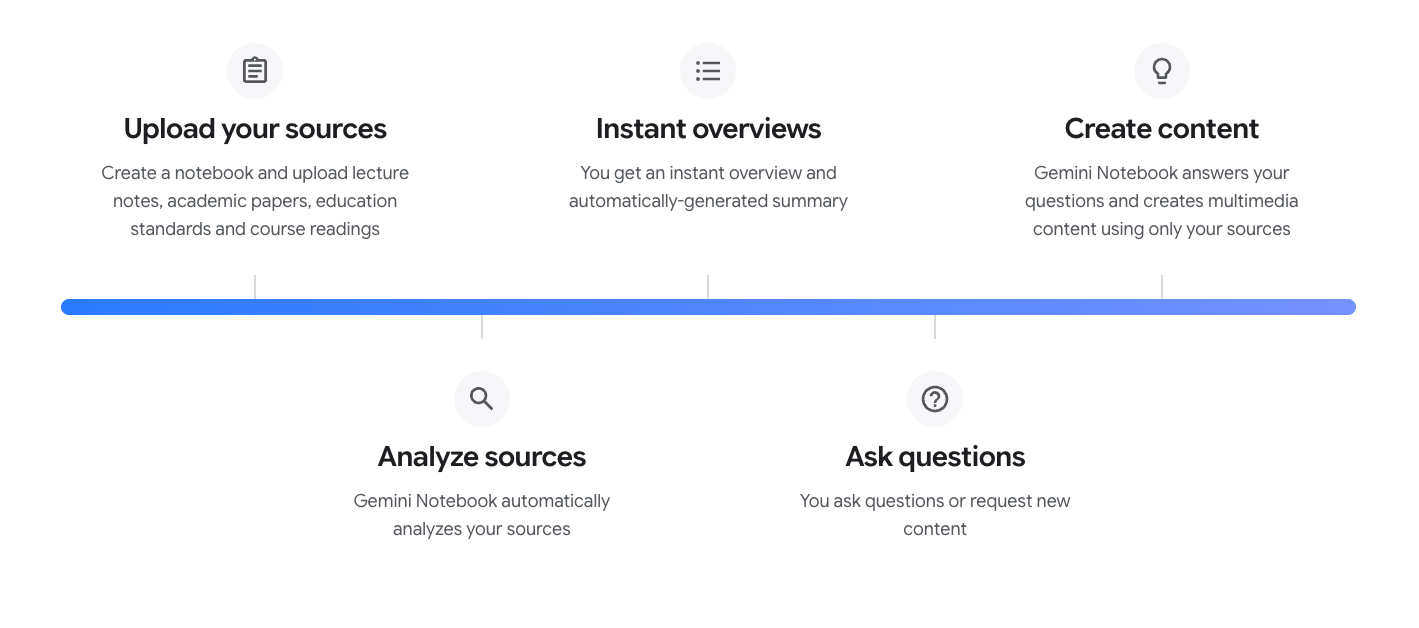
NotebookLM is an AI-powered research assistant designed to help you quickly understand, organize, and generate new content based only on your uploaded source material. It acts as a personalized expert in your documents, helping you turn research, notes, and raw data into polished outlines, study guides, and deep-dive discussions.

To access NotebookLM, visit notebooklm.google.comBe sure to sign in with your University of Miami Login ID. Once signed in, you will be taken to your NotebookLM dashboard where you can begin creating new notebooks and uploading sources.

NotebookLM is available to all University of Miami faculty, staff, and students as part of the institution's Google Workspace for Education Plus license. When you use NotebookLM with your UM account, your data (uploads, queries, and model responses) is protected under the Google Workspace for Education Privacy Notice. This data is not reviewed by human reviewers and is not used to train Google's general AI models.


Features and Capabilities

NotebookLM's primary strength is its ability to ground its responses exclusively in your uploaded content, minimizing the risk of "hallucinations" or inaccuracies by always providing citations.

Cards

Source Management:
  • Supported Sources: Upload a wide variety of materials, including:
    • Google Docs, Slides, and Sheets
    • PDF and text files
    • Web URLs
    • YouTube Video links (transcripts are analyzed)
    • Audio files (MP3/WAV)
    • Copied or pasted text
  • Source-Grounded Chat: Chat directly with your notebook to ask questions, summarize complex topics, and get insights based only on the documents you provided.
  • In-line Citations: Every AI-generated response includes links back to the exact passage(s) in your original sources, ensuring accuracy and transparency.
Content Generation and Study Aids:

Transform your source material into structured, usable formats:

  • Study Guides & Flashcards: Instantly generate interactive study aids, quizzes, and flashcards to help you memorize key terms and test comprehension.
  • Reports and Outlines: Generate professional documents like briefing docs, polished reports, blog posts, FAQs, or presentation outlines complete with talking points and supporting evidence.
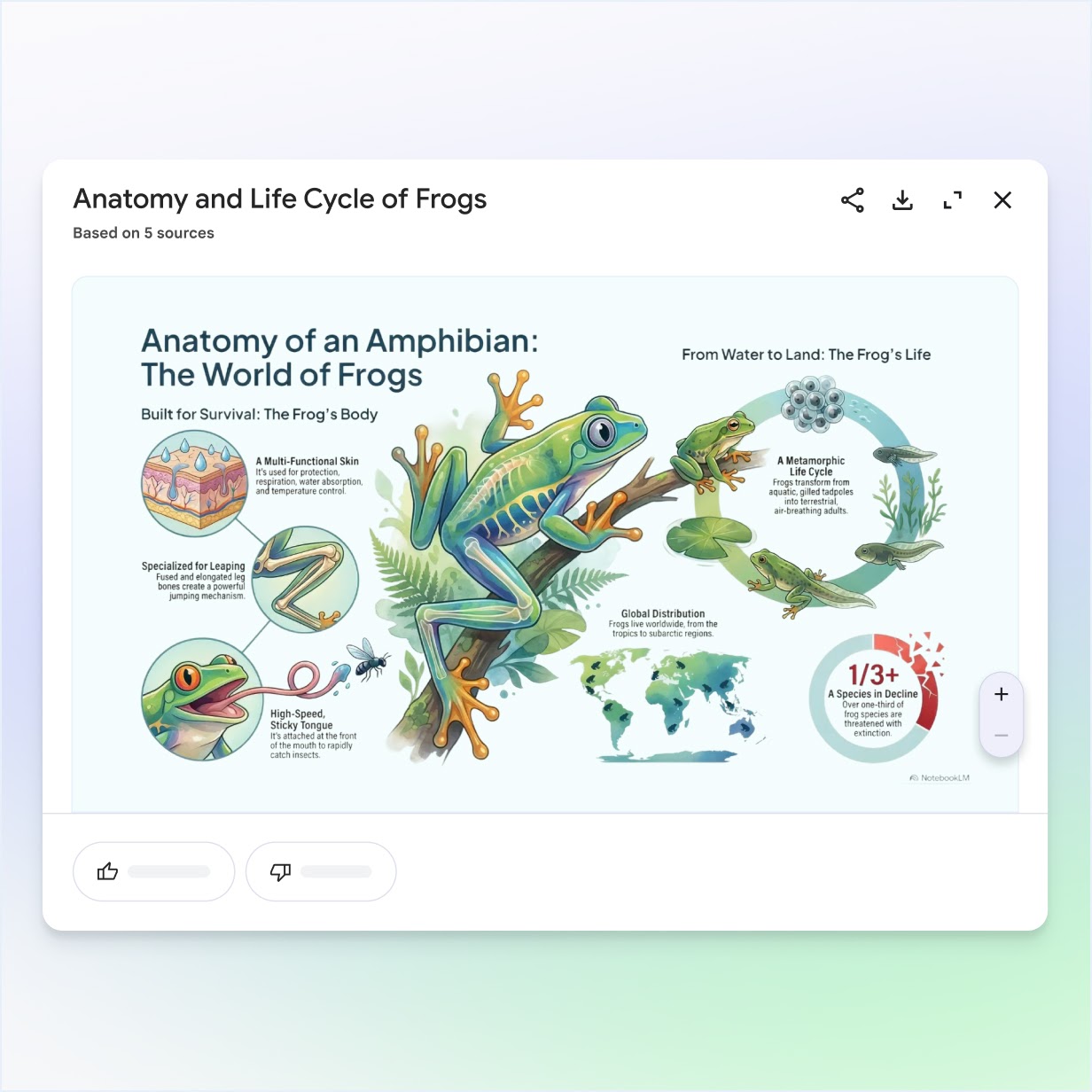
  • Mind Maps & Infographics: Create visual representations to map concepts and connections across your documents.
  • Audio Overviews: Turn your sources into engaging "Deep Dive" audio discussions with a single click. New formats include Brief, Critique, and Debate to explore material from different perspectives.


How-To Guides and Resources

Accordion Group

Recommended Use Cases

To get the most value from NotebookLM while adhering to University policies, focus on these academic and administrative applications:

Cards

Personalized Study Guides

Students can upload their class notes, lecture recordings, and required readings to generate flashcards and customized study guides for exams.

Recommended Sources:

  • Personal notes, lecture recordings (MP3/WAV), study handouts.
Academic Research

Quickly synthesize large volumes of scholarly articles, literature reviews, or case studies to find connections, identify opposing viewpoints, or draft an initial thesis statement.

Recommended Sources:

  • Downloaded PDFs of journal articles, personal notes (Google Docs), book chapters.
Committee and Meeting Summaries

Upload months of committee meeting minutes (Google Docs) or audio recordings to get a quick summary of decisions made, action items, and outstanding issues.

Recommended Sources:

  • Meeting transcripts, audio recordings, prior agendas.

Cards

Curriculum Planning

Compare and contrast different textbooks, pull out key learning objectives, or quickly generate sample quiz questions from syllabus readings.

Recommended Sources:

  • Syllabi, lecture notes, textbook chapters (in PDF or Doc format).
Grant Proposal Drafting

Generate an outline, key summary points, or FAQs for a funding proposal based on previous successful grants, research documentation, and internal policy documents.

Recommended Sources:

  • Previous grant proposals, internal research memos, budget spreadsheets.


Limitations and Advisories

While NotebookLM offers enterprise-grade data protection through the Google Workspace for Education Plus license, users must be aware of its operational limitations and specific compliance boundaries, especially concerning sensitive data.

Compliance Boundaries: HIPAA and FERPA

Your use of NotebookLM with your University of Miami account is governed by the Google Workspace for Education Terms of Service, which includes strong privacy protections.

Compliance Area
NotebookLM Status (UM Account)
Action Required by User
Data Training

Not used: Your uploaded files, chat history, and model outputs are not reviewed by human reviewers and are not used to train Google's generative AI models.

No action needed. This protection is automatic.

FERPA

Supports compliance: As a Google Workspace for Education Core Service, NotebookLM is designed to support the University's compliance with the Family Educational Rights and Privacy Act (FERPA).

Use caution: Do not upload large files containing sensitive student identifiers just for analysis.

HIPAA

Not covered by BAA: NotebookLM is not covered by Google's Business Associate Agreement (BAA) for HIPAA compliance.

Do not upload Protected Health Information (PHI): Do not use NotebookLM for research or clinical documentation that contains patient identifiers.
Operational Limitations

NotebookLM has established limits to ensure stable performance, which can affect how you organize large research projects.

  • Notebook Limit: Up to 100 total notebooks per account.
  • Sources Per Notebook: Up to 50 sources per notebook.
  • Source Size Limit: Each individual source document is limited to 500,000 words or a file size of 200MB.
  • Daily Query Limit (Chat): Up to 50 chat queries per day.
  • Audio Generation Limit: Up to 3 Audio Overviews per day.
  • Video Generation Limit: Up to 3 Video Overviews per day.
  • Reports/Quizzes/Flashcards: Up to 10 of each per day.

    Note: These limits are subject to change by Google and are generally high enough for most academic or administrative tasks.
Generative AI Limitations

NotebookLM has established limits to ensure stable performance, which can affect how you organize large research projects.

  • Source-Grounded Only: NotebookLM only answers questions based on the sources you provide. It cannot search the internet for external information.
  • Accuracy Check: The tool is a powerful assistant, but it is not infallible. Always cross-reference critical information with the cited source material (using the in-line citations it provides) to verify accuracy, especially for key facts, numbers, or complex arguments.
  • Data Quality: The quality of the output is dependent on the quality of your input ("Garbage in, garbage out"). Poorly scanned PDFs, fragmented notes, or poorly transcribed audio will lead to less accurate or insightful results.


Technical Support

For general support, visit the NotebookLM Help site: support.google.com/notebooklm

For general inquiries, contact the IT Service Desk.

Top